
How your card helps in a medical emergency abroad
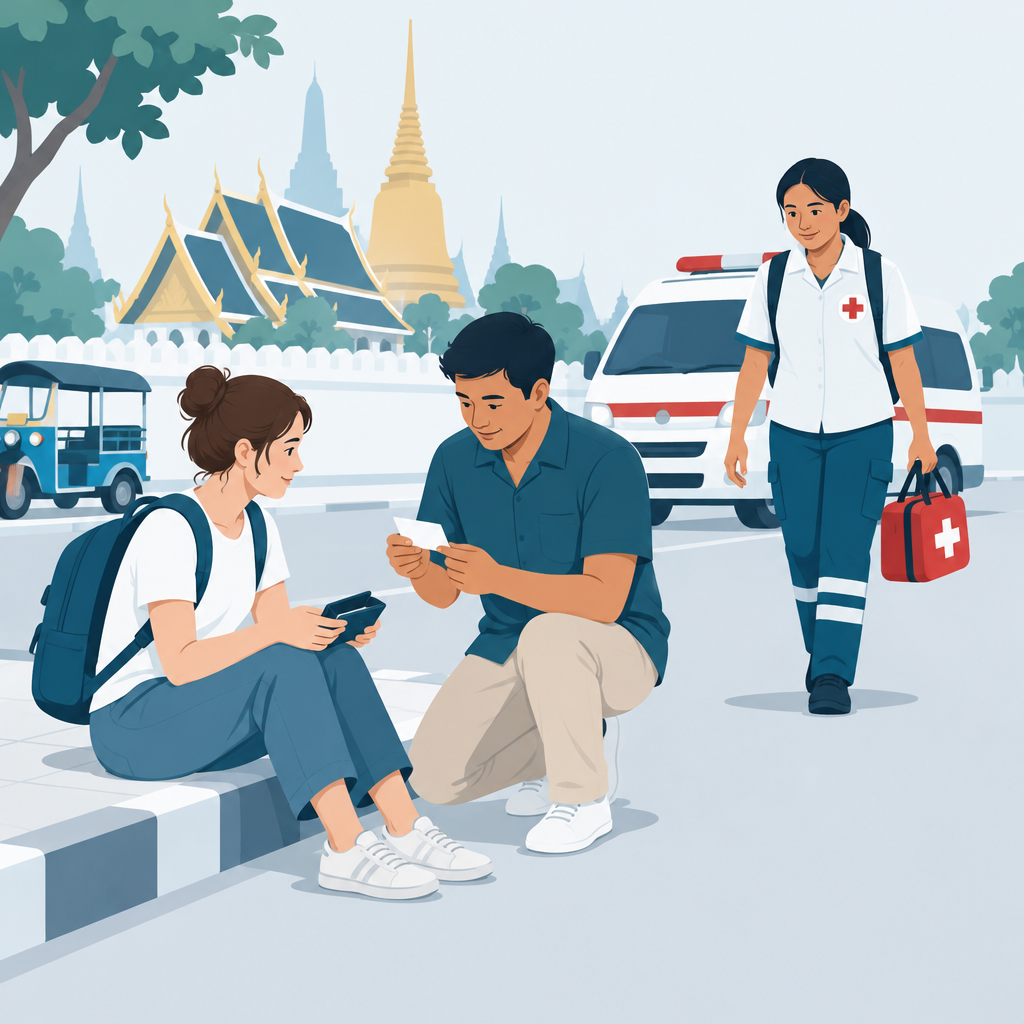
In a medical emergency abroad, a bystander or paramedic can read your Vitaglot Medical Emergency Card in the local language and see your conditions, allergies, medicines, the local emergency number and your emergency contacts.
Updated 19 November 2026
Steps
- Call the local emergency number. The card shows the emergency number for the country; call it first. From a mobile phone, 112 works in Europe and many other countries.
- Let someone read the card. Keep the card in your wallet so a bystander or responder can find it and read it in the local language.
- Scan the QR code. The QR code opens your emergency page, which responders can read in their own language.
- Find your rescue medication. If you listed an adrenaline pen or similar, the card tells a bystander where you keep it.
- Call your emergency contacts. The card lists the people to call, and the page has a call button for each.
What does a responder see?
On the card: your critical alerts, allergies, medicines, conditions, implants, blood group, emergency contacts and the emergency number, in the language of the country.
On the emergency page: the same information, in the responder's language, with the date it was last updated. The page tells them to show it to the paramedics, and it marks the content as entered by you and not verified by a clinician.
Who can open my emergency page?
Anyone who has your card or its emergency code can open the page. You choose what appears on it, and you can issue a new code if you lose the card: the old QR code stops working immediately.
What are the limits?
Vitaglot is not an emergency service. In a crisis, call the local emergency number. The card does not replace your medication, your doctor's advice or a medical alert device.
How to use your Restaurant Card when you eat out abroad · How to use your Medical Emergency Card at a doctor or pharmacy abroad · Create your card